
Decorative patterns and color
Stamped Concrete in Hamden, CT
Patterned, colored concrete in one continuous slab, sealed against salt and frost.
- Free estimates after we see the site, priced line by line
- Entrained-air mixes, planned joints and a full cure on outdoor pours
- Town approval questions settled before your date is booked
Patterned Concrete for a Freeze-Thaw Climate
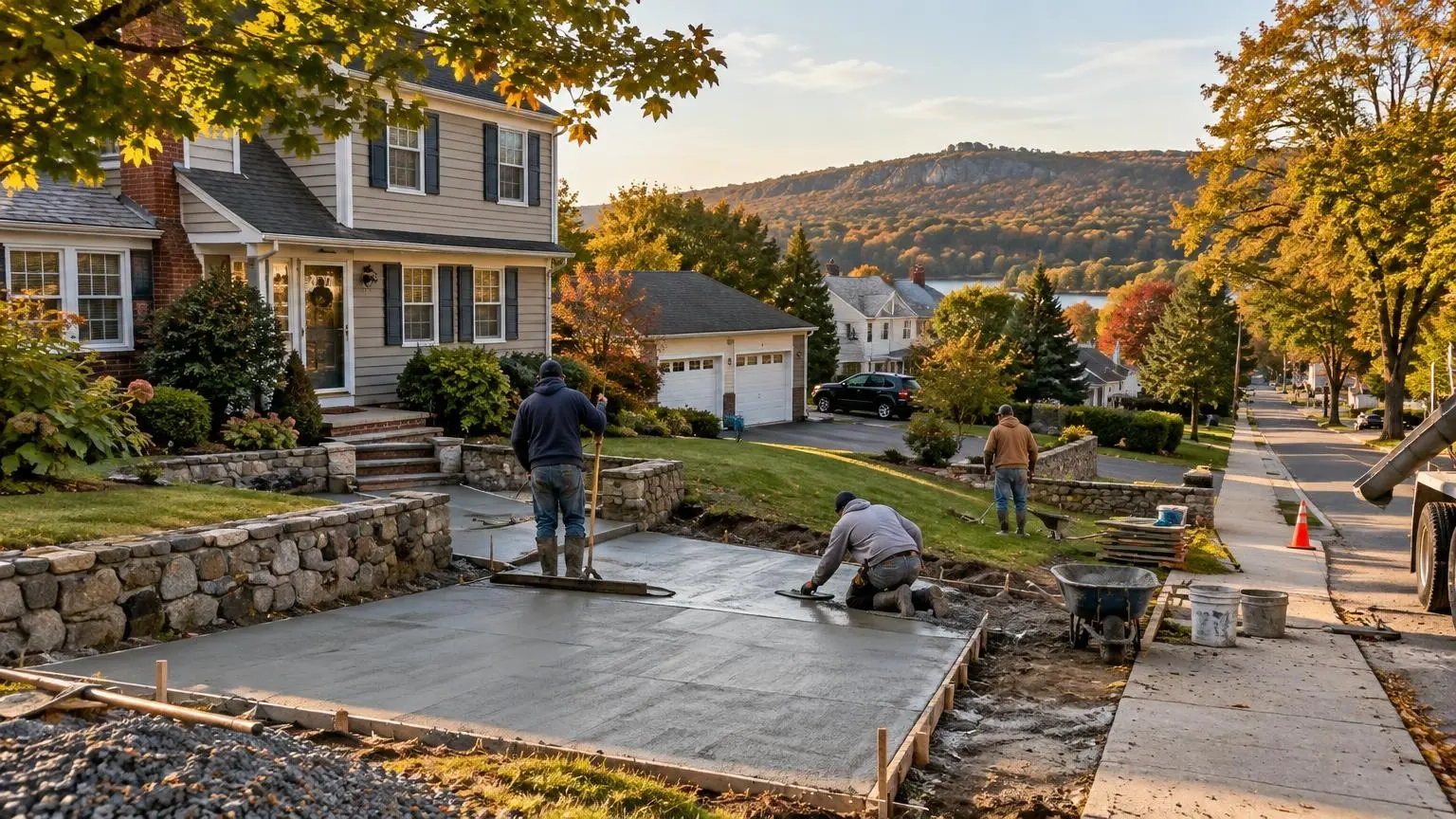
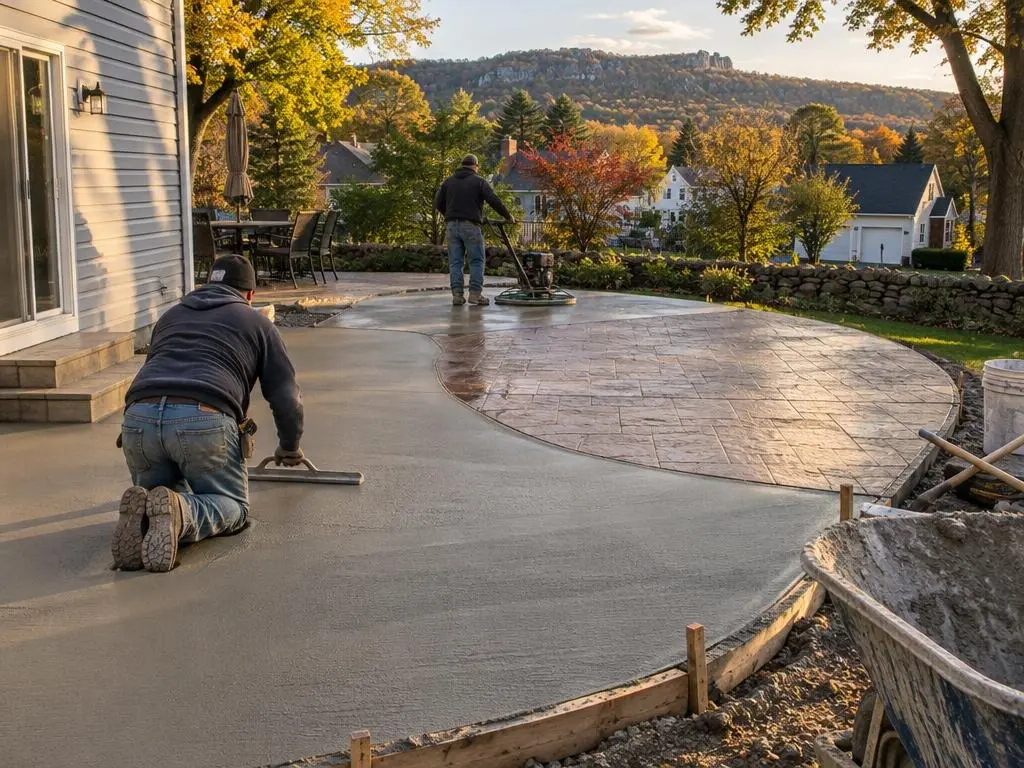
Stamped Concrete begins as an ordinary pour. While the surface is still workable, color goes on and textured mats are pressed in, so the cured slab reads as slate, flagstone, cut stone, brick or wood plank. Around Hamden, where stone walls and brick steps are common on older properties, a stamped patio or walk can echo that look without setting thousands of separate pieces.
Timing is the hard part. Every square foot gets colored, dusted with release and printed in the brief stretch when the mix is firm enough to hold a texture but soft enough to take it. Afterward the surface needs sealer, and fresh sealer every few years, because that coat is what shields color and texture from water, salt and foot traffic.
Pattern and color choices
- Ashlar slate or cut stone: rectangular stones in an irregular layout, a favorite for patios.
- Flagstone and fieldstone: free-form shapes for relaxed yards and garden paths.
- Brick and cobble: suited to borders, bands across a walk and driveway aprons.
- Wood plank: a deck look at ground level.
- Two-tone color: a base color plus a darker release that settles into the low spots for depth.
- Borders: a contrasting band around the field frames it and makes joint layout cleaner.
Where it pays off
Stamping earns its cost on patios and outdoor dining areas, front walks, the ground around a fire pit, and bands or aprons on an otherwise plain driveway. A fully stamped driveway takes tire wear, plow blades and salt, so a plain broomed field with a stamped border keeps the look while limiting the high-wear area.
Traction
Once sealed, a stamped surface can turn slippery in rain or ice. We favor patterns with real texture and mix an anti-slip grit into the sealer on walks, steps and anything near a door, which matters when a walk has to be kept safe all winter.
Upkeep
- Plan a fresh sealer coat every 2 to 3 years, or earlier once water soaks in instead of beading.
- Use sand for traction and keep ammonium-based melters off it entirely.
- Clear snow with plastic or a rubber-edged blade.
- Wash before resealing so dirt isn't locked under the new coat.
- Keep joints open so the slab can move the way it was designed to.
Where We Stamp
Color and pattern for the surfaces people see and walk on most.
Patios
Slate, stone or brick textures with a base and release color.
Front walks and garden paths
Textured paths with grit in the sealer for footing.
Driveway borders and aprons
Decorative bands framing a plain driveway field.
Fire pit areas
Patterned pads around outdoor seating.
Resealing
Cleaning and a fresh protective coat, with anti-slip grit where needed.
Typical Stamped Concrete Costs
| Item | Published range |
|---|---|
| Stamped patio, per sq ft | $9 to $30 |
| 12' x 12' stamped or stained patio (144 sq ft) | $1,150 to $4,300 |
| 16' x 16' stamped or stained patio (256 sq ft) | $2,000 to $7,700 |
| 20' x 20' stamped or stained patio (400 sq ft) | $3,200 to $12,000 |
| Stamped driveway, per sq ft | $8 to $26 |
| Stamped sidewalk, 4' wide, per sq ft | $10 to $21 |
| Stamping added to a standard finish, per sq ft | $3 to $4 |
| Sealing, per sq ft | $1 to $3 |
National figures from HomeGuide's concrete patio, driveway and sidewalk cost guides. Local prices vary with access, grade, removal and subgrade, and your written estimate sets the actual price.
Stamped Job, Step by Step
1. Pick the look
Pattern, colors and border chosen, and the slab laid out on site.
2. Base and forms
Digging, compacted stone, forms and reinforcement, as for any outdoor slab.
3. Color and stamp
Concrete placed and colored, release applied, mats pressed in at the right moment.
4. Wash, cut, seal
Leftover release is rinsed away, joints are sawn, and sealer follows after curing.
Stamped Concrete Questions
Will stamped concrete survive Connecticut winters?
Yes, when it has entrained air, a sound base, joints and a proper cure, and when it stays sealed. Plan on resealing every two to three years as part of owning it.
Does stamped concrete get slippery?
After sealing it can be slick when wet or icy. A textured pattern plus anti-slip grit in the sealer helps a great deal, and we recommend both on walks and near doors.
Can a stamped slab crack?
Like any slab, yes. Joints are tucked into the pattern where possible, and a good base with reinforcement keeps cracks tight.
Can my existing patio be stamped?
Hardened concrete can't be stamped. Stamped overlays exist but depend on a sound slab underneath, so a cracked or sunken patio is usually better replaced.
Stamped Concrete Service Areas
- Concrete Contractors in Hamden, CT
- Concrete Contractors in New Haven, CT
- Concrete Contractors in North Haven, CT
- Concrete Contractors in Wallingford, CT
- Concrete Contractors in Cheshire, CT
- Concrete Contractors in West Haven, CT
- Concrete Contractors in East Haven, CT
- Concrete Contractors in Branford, CT
- Concrete Contractors in Woodbridge, CT
- Concrete Contractors in Orange, CT
- Concrete Contractors in Milford, CT
- Concrete Contractors in Bethany, CT
- Concrete Contractors in North Branford, CT
- Concrete Contractors in Meriden, CT
- Concrete Contractors in Guilford, CT
- Concrete Contractors in Prospect, CT
- Concrete Contractors in Naugatuck, CT
- Concrete Contractors in Ansonia, CT
- Concrete Contractors in Seymour, CT
- Concrete Contractors in Derby, CT
- Concrete Contractors in Shelton, CT
- Concrete Contractors in Southington, CT
- Concrete Contractors in Madison, CT
Get a Stamped Concrete Estimate
Tell us where it would go and which styles appeal to you. We'll bring pattern samples and a written price.